The Ottawa Society for the Arts and Science is delighted to announce that its 2025-2026 season will be expanded and co-sponsored with the Friends of Lifelong Learning @ Carleton. Please see the following for details on confirmed events and check back for further information on lectures not already listed.
Please contact Gail Larose at glarose0@gmail.com for Zoom link details.
COMING IN 2026
(Check here for details on further talks)
February 4, 2026
Moira McCaffrey
Via Zoom – Please contact Gail Larose at glarose0@gmail.com for Zoom link details.
Wednesday, February 4, 2026
7pm ET
“The time has come, the Walrus said, to talk of many things”: Maritime walrus and their hunters in the Gulf of St. Lawrence Storms that sweep across the Gulf of St. Lawrence stir up tangible memories of a time when walrus were found across the region. On the Îles de la Madeleine, tusks and bones still emerge from the shallows – a testament to how prevalent walrus once were on the archipelago. Recent biological research suggests that Maritimes walrus was a morphologically and genetically distinct group, though similar to contemporary Atlantic populations. Archaeological evidence attests to the long time depth of human-walrus interactions in the Gulf of St. Lawrence, supporting the view that Indigenous peoples valued and hunted walrus from the time of their arrival in the far Northeast. Ethnohistoric accounts document sustainable walrus hunting practices in the Gulf, with ivory and oil serving as trade items at a time when Indigenous populations were being forced from their territories.
An increased European presence ushered in an intense period of walrus exploitation. On the Îles de la Madeleine, Maritimes walrus were subjected to unprecedented levels of human predation in the 1700s, leaving them with neither time nor habitat to adapt and recover. Climate-related factors such as relative sea level rise may also have played a role in the extirpation of Maritimes walrus. Today, these same factors, combined with erosion and amateur collecting, are destroying archaeological sites essential to documenting past ecosystems and understanding human impacts within them. Join me as we uncover this lost history and reflect on its critical lessons for our threatened world.
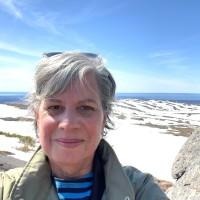
Moira McCaffrey is an archaeologist and museologist based in Ottawa. She has served as Executive Director of the Canadian Art Museum Directors Organization (CAMDO-ODMAC) and was formerly Vice President, Research & Collections, at the Canadian Museum of Civilization. Moira spent close to 20 years at the McCord Museum in Montréal, first as Curator, Ethnology & Archaeology and then as Director, Research & Exhibitions. Moira has led the development of over 80 exhibitions, as well as web sites, publications, and repatriation projects. She has served on the Boards of ICOM Canada, the Virtual Museum of Canada, and the Cultural Properties Commission of Québec. She is currently Chair of the
Carleton University Art Gallery (CUAG) Advisory Board.
Trained as an archaeologist, Moira has carried out survey and excavation work in northern Québec and on the Îles de la Madeleine. She has worked in the far interior of Labrador and on the coast in Torngat Mountains National Park. She is currently advising Innu Nation in Labrador on the development of a new museum and a travelling exhibition. Since 2020, Moira has been co-directing the Naskapi Archaeology Project for the Naskapi Nation of Kawawachikamach, involving a multi-year archaeology field program in far northern Québec. She recognizes that working with and for Indigenous communities is both a profound privilege and a lifelong journey of discovery and learning.
Michael Allen
Via Zoom – Please contact Gail Larose at glarose0@gmail.com for Zoom link details.
Wednesday, March 18, 2026
7pm ET
Katalin Karikó – her rise from obscurity to work on a COVID vaccine and the Nobel Prize for Medicine
What’s the connection between a 900-pound teddy bear and a lifesaving COVID-19 vaccine?
It’s Katalin Karikó, a Hungarian biochemist who, through decades of labouring in obscurity, rose from humble beginnings growing up in one room of a mud-walled home to become a Nobel Laureate. When most researchers doubted the usefulness of messenger RNA, she persisted in her belief in its potential which led to a completely new type of vaccine. Along the way she and her husband raised a daughter who was a two-time Olympic gold medal rower.
Michael Allen will relate the science behind the COVID-19 vaccine and the remarkable story of Katalin Karikó’s life as told in her autobiography.
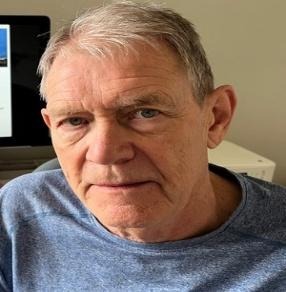
Michael Allen worked as a family physician in Nova Scotia for 17 years before joining Dalhousie University’s Faculty of Medicine in 1994. He retired in 2022 as a full professor in the Faculty’s Department of Continuing Professional Development where he was Director of Evidence-based Programs. In retirement he has been taking courses and reading popular books on mathematics and physics. He hopes that others will find Katalin Karikó’s story as fascinating as he did.
Josh Beer, Michael Bloom and Douglas Moggach
via Zoom – Please contact Gail Larose at glarose0@gmail.com for Zoom link details.
Thursday, April 16, 2026
7 pm ET
Plagues and Literature in Ancient and Mediaeval Times
Josh Beer
The Ancient World
The recent outbreak of the Covid virus showed that plagues can have unexpected consequences. European literature begins with a plague, described in the opening of Homer’s war epic, the Iliad (c.700 BC). Although a cure is found, the rippling effect pervades the whole poem. Similarly, a plague broke out in Athens near the start of the Peloponnesian war (431-404 BC). It killed at least a quarter of the population and helped undermine the confidence with which the Athenians entered the war.
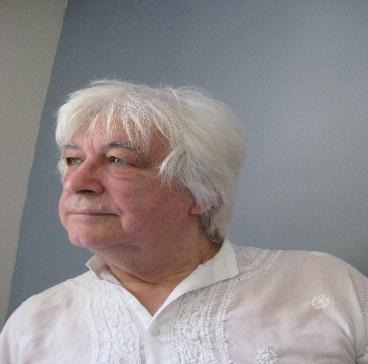
Josh Beer is founder and member of the executive committee of OSFAS. He is an adjunct professor at Carleton University, after having taught there for 50 years. For over twelve years, he directed students of the College of Humanities in highly-praised dramatic readings of Greek tragedy.
Michael Bloom
The Middle Ages
The most striking plague of the medieval period likely originated in Mongolia in the 1340s. The Black Death spread rapidly west by land and sea, erupting spectacularly in an unprepared Europe in 1347 via Italy – to the consternation of people of every rank and role in society. From this initial breakout until its final retreat about 1720 the plague repeatedly ravaged European populations and altered government, the Church, society and economy everywhere.
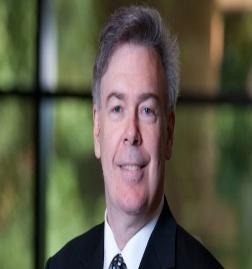
Michael Bloom is a founder member of the OSFAS executive committee and former vice-president of the Conference Board of Canada. Dr. Bloom is a graduate of the University of Oxford (DPhil) and Carleton University (BA, MA).
Douglas Moggach
The Early Renaissance
Giovanni Boccaccio (1313-1375) was an eyewitness of the Black Death that ravaged Europe around 1348. His Decameron, completed in 1353, contains vivid descriptions of the plague’s devastating effects in Florence. His book also contains reflections on the fragility of life, love, and human suffering that offer profound insights into his times. These insights inspired Chaucer and Shakespeare, illustrating the emergence of modern ideas of the self and the world.
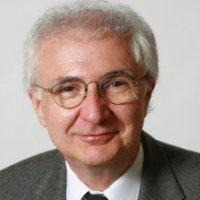
Douglas Moggach is a member of the OSFAS executive committee, holds a doctorate from Princeton University, and has held the University Research Chair in Political Thought at the University of Ottawa where he was named Distinguished University Professor in 2011. Honorary Fellow of St. Catharine’s College, Cambridge, and Honorary Professor of Philosophy at the University of Sydney, Professor Moggach was elected a Fellow of the Royal Society of Canada in 2025. He has held visiting appointments at King’s College, Cambridge, Queen Mary University of London, and the Scuola Normale Superiore di Pisa.
John Gahan
via Zoom – Please contact Gail Larose at glarose0@gmail.com for Zoom link details.
Thursday, May 7, 2026
7 pm ET
The Grand Tour
The Grand Tour of the eighteenth century was an extended journey through Europe to Italy and was considered a necessary part of the education of young aristocrats, primarily British and male. Rome was the ultimate destination, and it was in Rome amidst its ruins that the tourists spent considerable time. By the second half of the eighteenth century the Grand Tour had in fact become so established that guides were published detailing how to get there and what to see. On the basis of these guides as well as travellers’ accounts, this illustrated presentation will follow in the steps of the grand tourists, and once in Rome we will compare what the guides say and the travellers saw against what we know of ancient Rome today from archaeology.
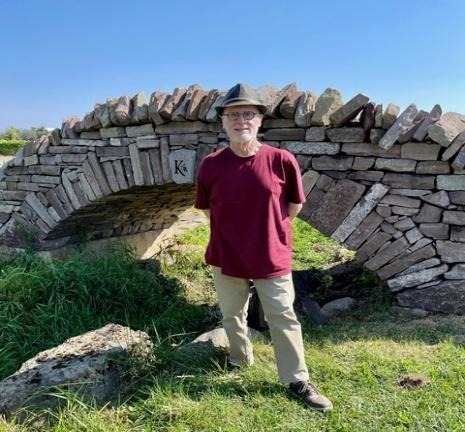
John Gahan took early retirement from the University of Manitoba in 2001 when he and his wife (and their three cats) moved to Ottawa. Just when his life as a retiree was becoming routine, he welcomed the opportunity to start teaching again as a contract instructor in Greek and Roman Studies at Carleton University. Despite retiring from teaching again, he is fortunate indeed in being able to maintain his connection with Carleton as an Adjunct Professor in their College of the Humanities. In addition to teaching Greek and Latin, Greek and Roman archaeology and civilization, Greek and Latin literature in translation, etc., he has led student tours to Greece and Rome and written and published on Greek and Latin literature and on the Grand Tour.
 Ottawa Society for the Arts and Sciences